DATE
D2C Jewellery Brand Scaling Tactics: The 60/40 Rule of Marketing
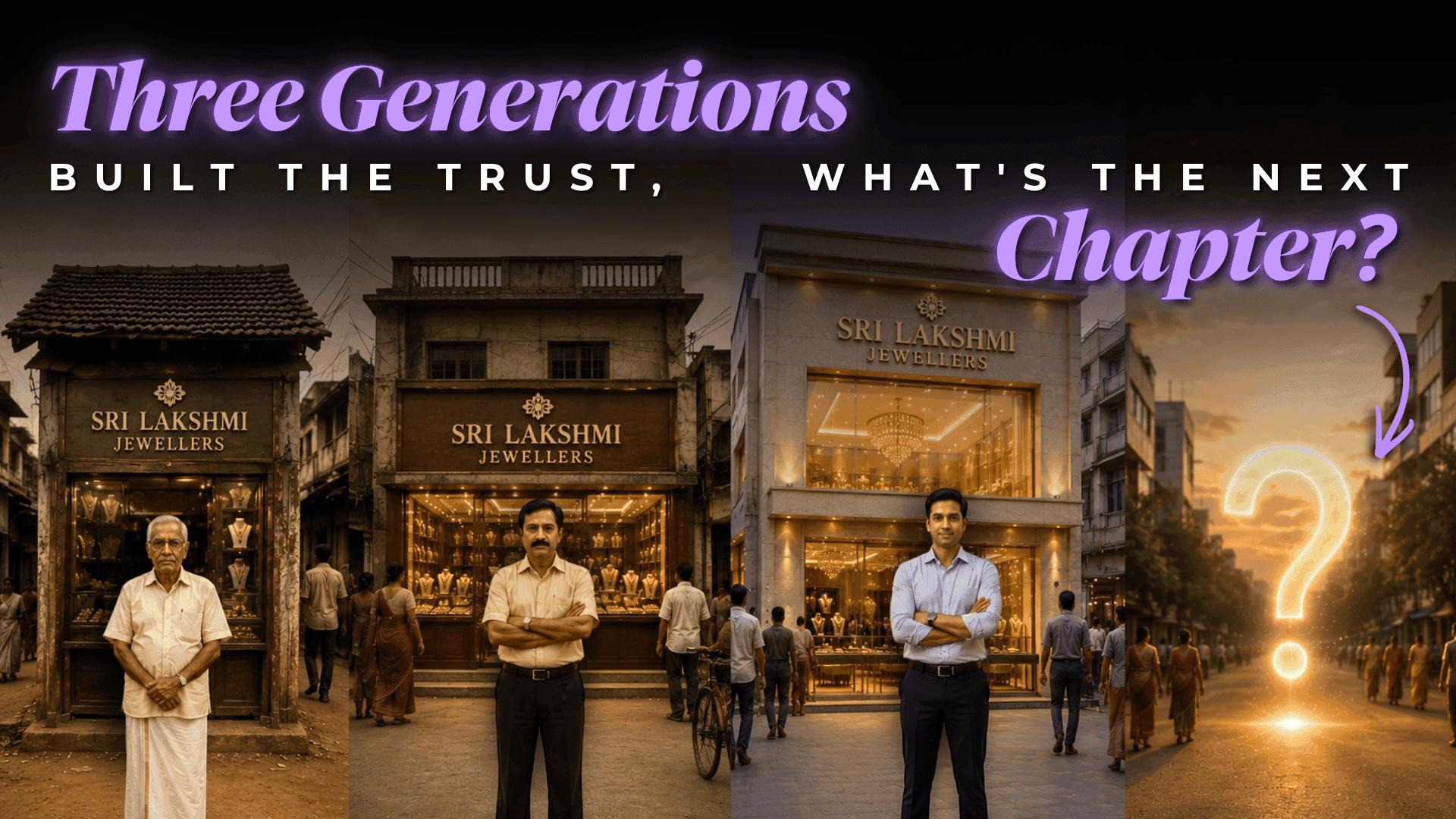
Walk into any multi-generation jewellery store in India and you'll hear some version of the same line: "We built this on trust. Nobody asked us for a ROAS."
That's true, and it's also incomplete. Trust hasn't gone anywhere - it's still the entire product. What's changed is that trust used to be built once, over decades, inside four walls. Today it has to be shown, repeatedly, to a customer scrolling past hundreds of other jewellers in the same city before she ever walks into yours.
That's the gap where most brands searching for a D2C jewellery marketing strategy in India get stuck. They treat marketing like a vending machine : put in money, expect gold coin sales to come out the other end, and the moment returns dip even slightly, they panic and pull the plug.
If you're trying to figure out "How to Scale a Jewellery Brand Online", the honest answer isn't "spend more" or "post more." It's understanding two different jobs marketing has to do, and giving each one the right share of your attention and budget.
1. The 60/40 Philosophy Behind Every D2C Jewellery Brand Scaling Strategy
Here's a rule that holds up across the jewellery industry, whichever brand you study: roughly 60% of your marketing effort should go toward Brand Building, emotional storytelling, prestige, trust and 40% toward Performance Marketing, which captures demand that already exists.
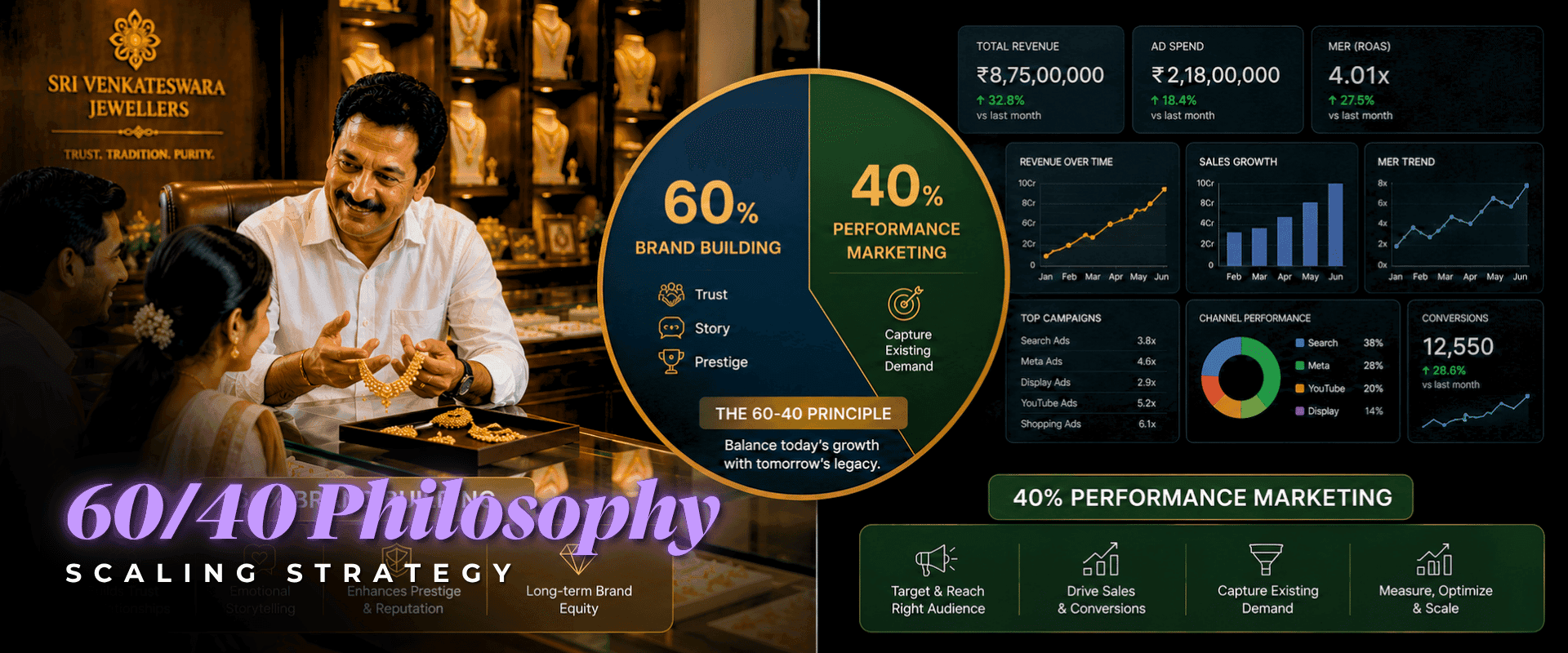
Think of it like the store itself. The window display, the lighting, the warmth of the greeting at the door, that's brand. It doesn't "sell" anything in that exact moment, but without it, nobody feels confident enough to spend three lakhs on a necklace. The counter conversation, the price discussion, the actual close, that's performance. One without the other simply doesn't work.
Spend 100% on performance, and your acquisition costs quietly rise every quarter until the math stops working, you're paying more and more to reach people who don't yet trust you enough to buy. Spend 100% on brand, and you'll have a beautiful Instagram page and a quiet cash counter by month-end.
The brands that scale sustainably are the ones that stop asking "should we run ads or build our story?" and start asking "how much of each, and in what order?"
2. Brand Building: The "Trust Asset" Every Jewellery D2C Brand Needs
A ring or a wedding necklace is never an impulse buy. Nobody adds gold to cart at 11pm the way they do a dress. So for jewellery, trust isn't a nice-to-have layered on top of the product, it is the product.
Founder-led storytelling -
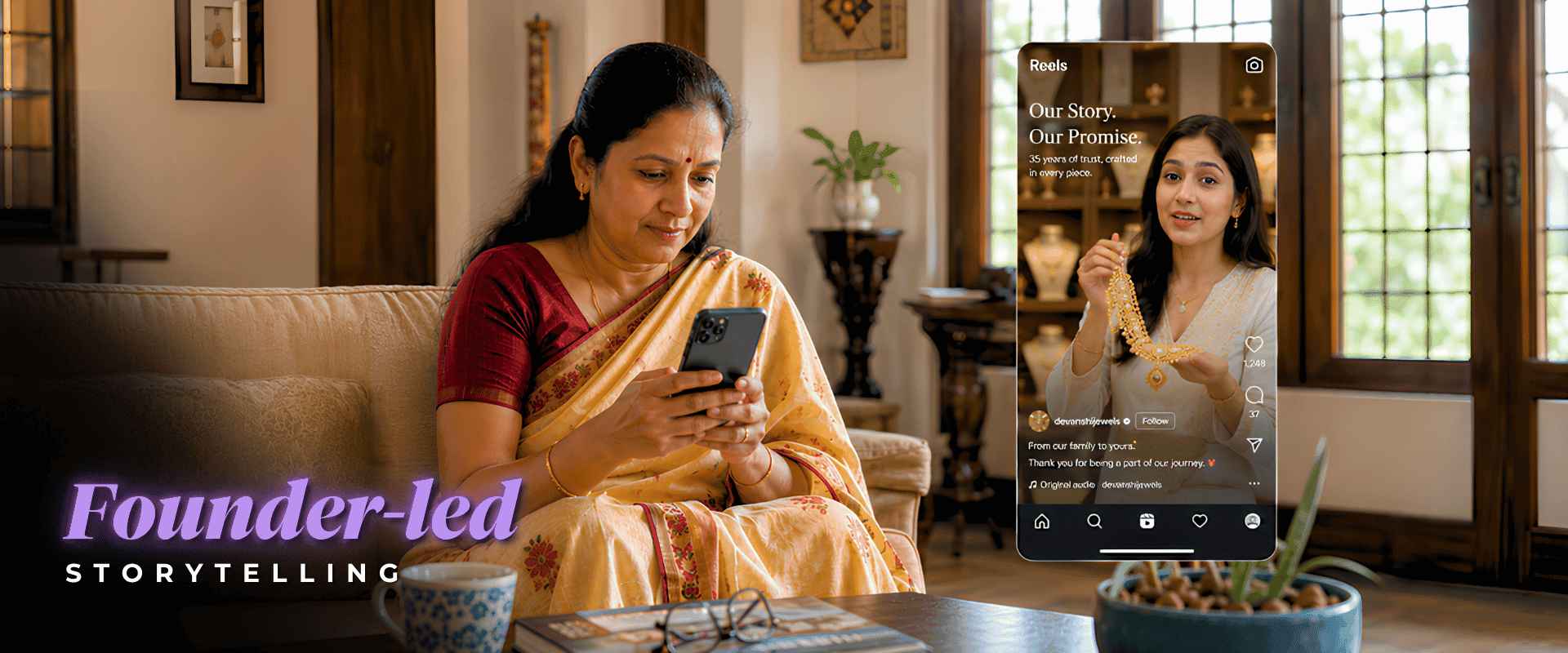
Customers aren't just buying karats; they're buying into who you are and why you've lasted. A short, honest video of the person running the business, explaining a value they've never compromised on does more for conviction than any discount banner ever will.
The unboxing experience -
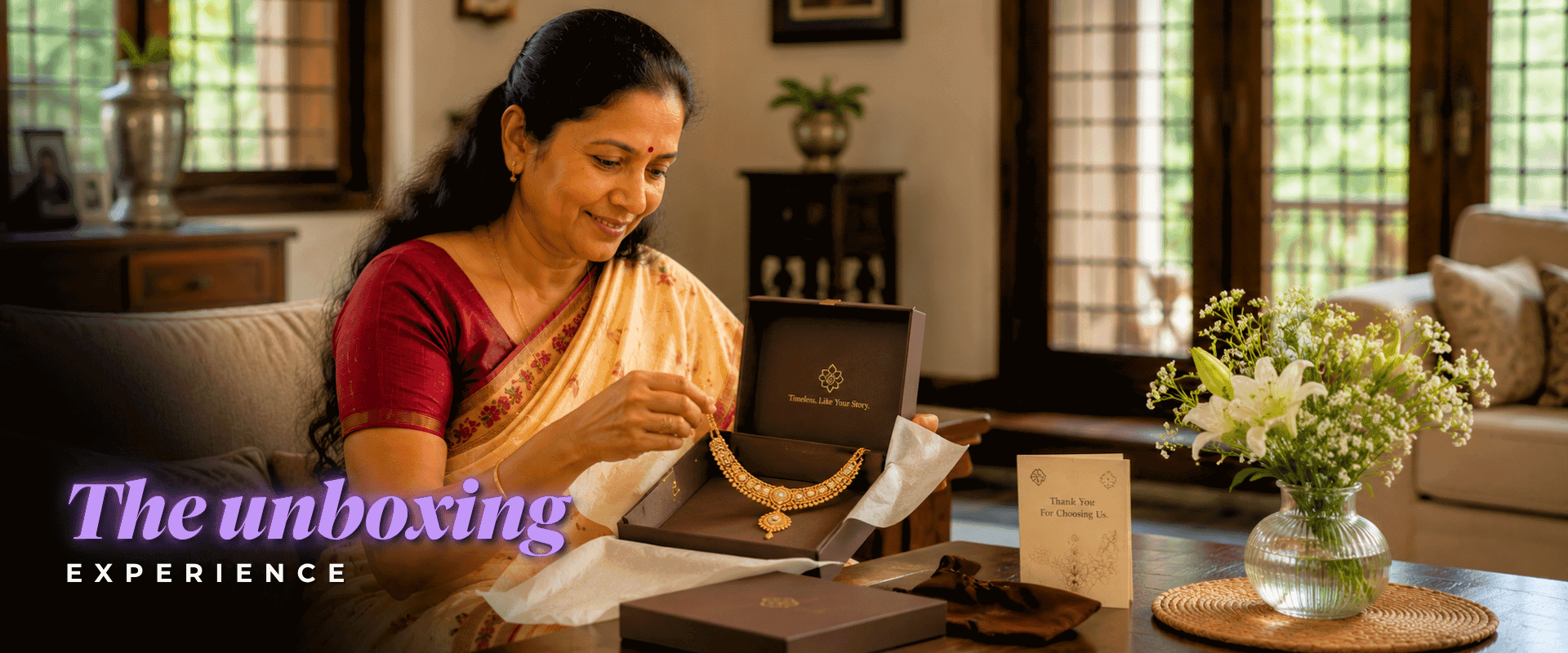
In luxury, the box is part of the jewellery. A customer who receives a thoughtfully packaged piece photographs it, shares it, and without meaning to, becomes an advocate for free.
Social proof, systematically shown -
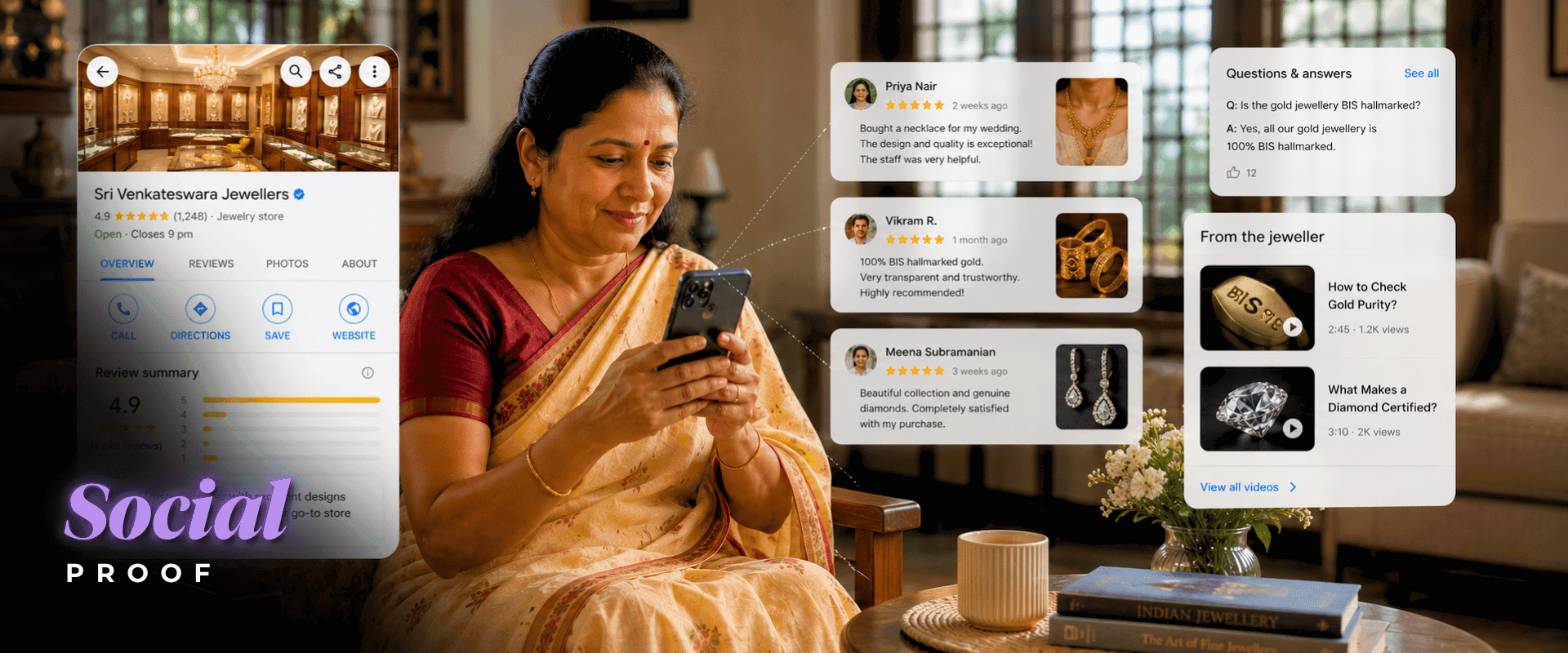
Reviews sitting unused in a drawer help no one. Across the jewellery category, a pattern shows up again and again: content that teaches something "how to check gold purity," "what makes a diamond certified" consistently earns more trust than a glossy product shot alone. Customers believe the store that educates them before it tries to sell them.
3. Performance Marketing for Jewellery Brands: The Growth Engine
Performance should be surgical, not scattershot. For jewellery, a simple three-stage approach works well,
Awareness - Lifestyle content outperforms white-background product shots almost every time. A necklace worn at an actual wedding tells a story a studio shot never can.
Consideration - Reach people who've already shown interest with content that builds conviction, quality education, the story behind a collection, the craftsmanship involved.
Conversion - Bring the exact piece someone was interested in back to them, paired with the trust signals that remove hesitation: certified purity, EMI options, easy returns.

Timing matters as much as targeting, campaigns placed around paydays, festivals, and wedding season consistently perform better than the same message sent at a random point in the month, simply because that's when your customer actually has money and intent in hand. This is true across every high-ticket, considered-purchase category - jewellery, real estate, fine construction, where the buying decision is emotional, big, and rarely rushed.
4. The Metrics That Actually Matter When Scaling a D2C Jewellery Brand
Ask most jewellers what their marketing is "doing" and they'll say "reach" because that's the number an ad platform hands them by default. But reach doesn't pay staff salaries.
Here's what actually matters:
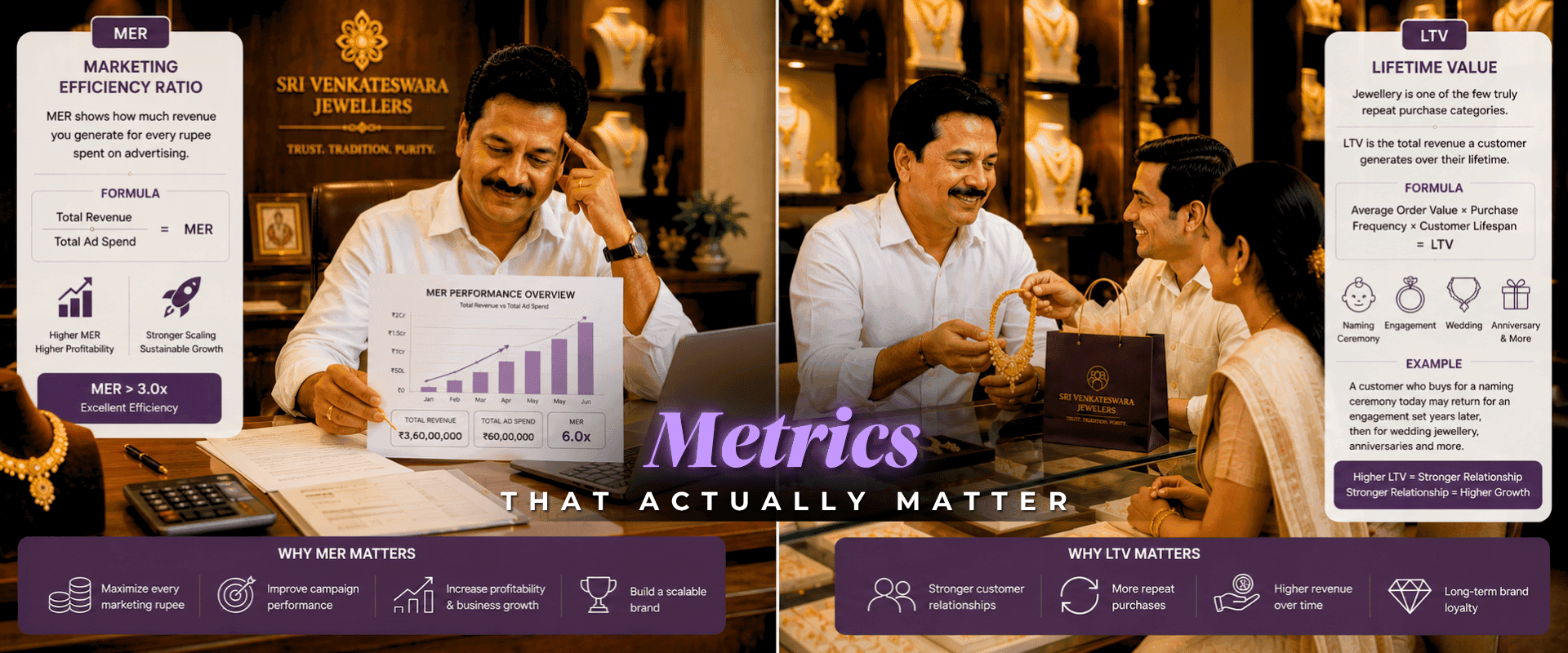
MER (Marketing Efficiency Ratio) - total revenue divided by total ad spend. This is the one number that tells you if you're genuinely profitable at scale, not just visible.
LTV (Lifetime Value) - jewellery is one of the few truly repeat-purchase categories. A customer who buys for a naming ceremony today may return for an engagement set years later, and gifts in between. The real goal isn't one sale, it's a relationship that spans decades, the same way a family jeweller has always operated, just with better memory and better timing now.
If you're a jeweller reading this, the number that should matter to you isn't impressions or CPM. It's simpler - "How many people messaged you, how many walked in, how many bought". Everything else is noise dressed up as data.
5. Why Most D2C Jewellery Brands Plateau
Most jewellery brands don't hit a ceiling because they lack budget. They hit it because they treat marketing as a pile of disconnected tactics instead of a system - a reel here, a random ad there, no rhythm connecting any of it.
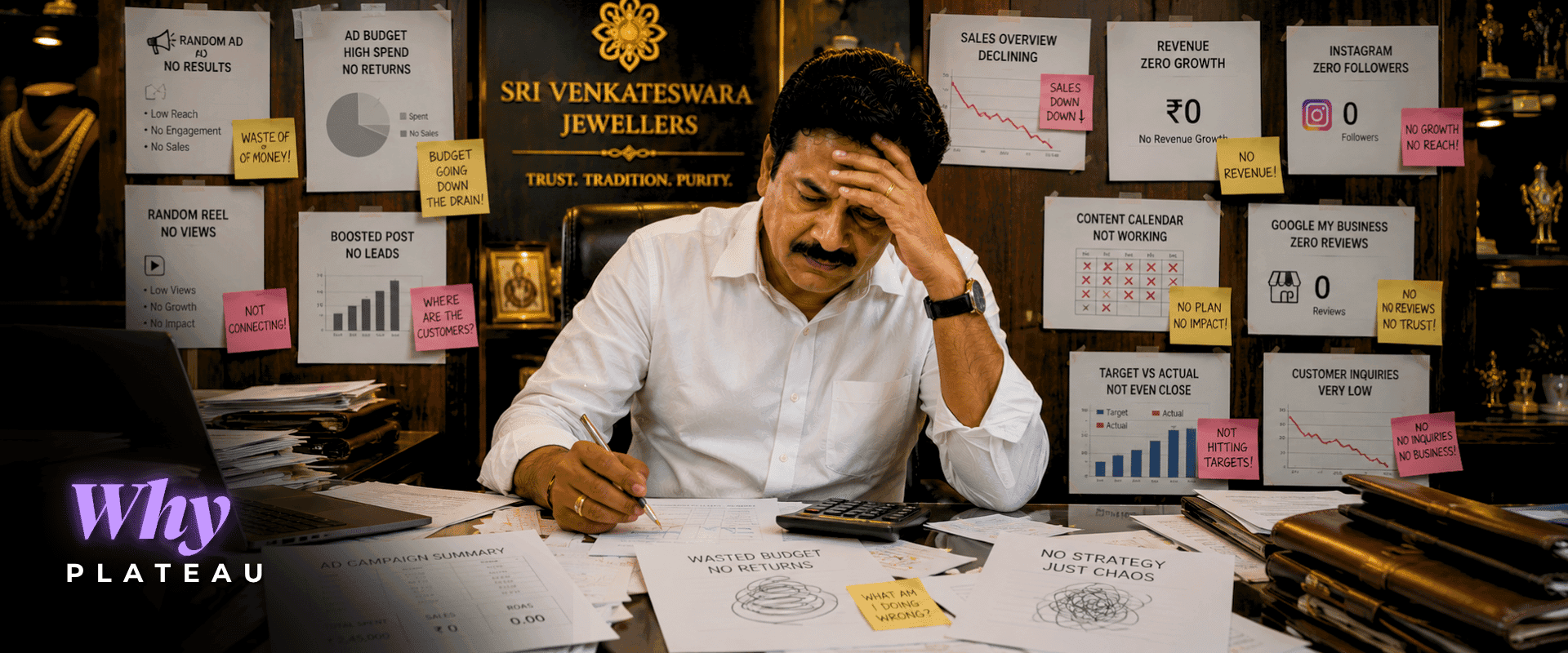
Scaling past that plateau usually comes down to three disciplines:
Creative iteration: regularly testing new ad concepts instead of recycling the same three product shots for months.
Conversion rate optimisation: a website that loads fast and a payment flow with zero friction, so the demand you've already earned doesn't leak away at the last step.
Regional and cultural timing: knowing which cities, festivals, and moments actually move gold in your specific market, and building a calendar around that instead of a generic one.
The Real Conversation Happening at Home
Here's something most marketing content won't tell you, because most of it isn't written for jewellery families specifically.
When a third-generation successor says "let me think about it," it's rarely about the money. It's usually, I have to go home and convince my father, and I'm not sure I'll win that conversation.
The elder isn't against growth. The elder is against risk - the risk of watching the family's legacy get spent on something that feels, to them, like "Instagram nonsense." That fear is completely reasonable. They built this business without any of it.
But consider the reframe, when the elders started the business, there were maybe five jewellers in the city competing for the same customer. Today there are hundreds, and most of them are online, actively trying to reach the exact same family your business has served for generations.
The new competition isn't better at jewellery. They're just easier to find.
The daughter of a customer who's trusted your family for thirty years still exists, but she searches online first. Being visible isn't a betrayal of the legacy that was built. It's how that legacy stays findable for the next generation of customers.
Key Takeaway
Performance marketing brings the customer to the door. Brand building is what convinces them to walk in and come back for every anniversary, every festival, every gift after that.
Stop treating these as competing budgets fighting for the same rupee. Use performance to create momentum today. Use brand to build the kind of moat that outlasts any single campaign the same kind of trust it took generations to earn in the first place.
Ready to scale your jewellery brand the right way?
At DMS Designs, we're a creative and performance marketing agency built specifically for jewellery brands across India.